
Ling 6 at home: what it is and how parents actually use it.
Six simple sounds, about two minutes, and one of the most useful things you can do every day. Here's what the Ling 6 check is, and how to fit it into the home routine.
The Ling 6 check is a quick way to check how your child is listening today. You say six simple sounds–mm, oo, ah, ee, sh, ss–and watch how your child responds. It takes about two minutes, and it is one of the most useful things you can do at home every day.
Our Listening Check app streamlines the process of running listening checks and tracking your child's listening. Learn how to make the most of the Ling 6 listening check.
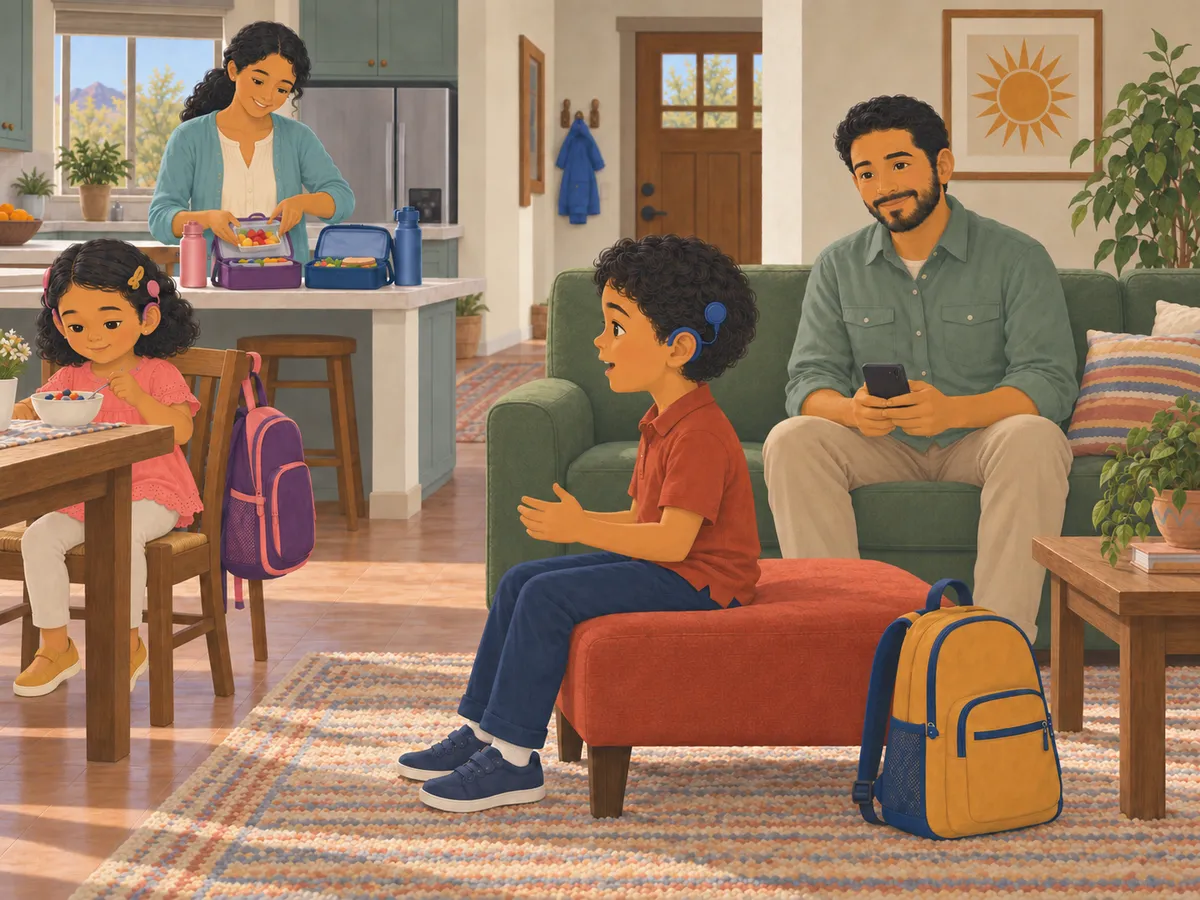
Image description: Six-year-old Mateo, wearing a navy cochlear implant, sits on a rust ottoman in the living room and repeats a sound back during a before-school listening check, while his father, Rafael, sits on the sofa behind him, out of his line of sight, holding a smartphone. In the background, his mother, Elena, packs lunch boxes at the kitchen counter and his four-year-old sister, Sofía, wearing a coral-plum cochlear implant, eats breakfast at the table, with both children's backpacks ready, in their Tucson home.
Rafael does a quick Ling 6 repetition listening check with Mateo before school. Sofía's turn is next.
Rafael: sss
Mateo: sh
Rafael logs the response as No in the Listening Check app.
Rafael: oooo
Mateo: oooo
Rafael logs the response as Yes in the Listening Check app.
Six sounds that cover the whole range of speech
The six sounds were chosen by Dr. Daniel Ling, one of the pioneers of teaching DHH children to listen and speak. Together these six sounds span the range of speech that matters most for a child using hearing technology. "mm" and "oo" sit at the low end. "ah" and "ee" sit in the middle. "sh" and "ss" are the quiet, high-pitched sounds that hearing aids can often miss.
If your child can detect all six, that is good evidence that sounds across the speech range are reaching their brain today.
If your child can identify all six, that is good evidence that sounds across the speech range are being processed by their brain clearly enough to tell the difference between these sounds.
It is the most widely used listening check there is, and the easiest to learn well, which is exactly why it is the place for families to start.
A check shows how your child hears today. It does not replace the clinical tests.
A listening check is a short, structured way to see whether your child is hearing well today, in a natural home environment. Here is what it is not: it isn't a hearing test, it isn't an audiologist's measurement. Critically, it also isn't a daily report card, and it isn't something your child is meant to study for. You run the check; your child just listens.
Most days your child's listening will be fine. The point is to run it every day, so you can spot any changes early, and have the data to back it up.
How to run a check well
Keep it simple, and keep it the same each time:
- A quiet, familiar room.
- Sound only, so your child responds to what they hear and not to lip-reading. Say the sounds where they cannot see your mouth.
- A steady, moderate, conversational voice.
- The same distance each time. A miss from across the room means something different from a miss at arm's length.
That is the short version. How to set the conditions, keep a record that means something, and what to do when a check comes back low, is all in How to run a listening check at home.
Three ways your child shows you they heard
Depending on their stage, a child can tell you "I heard that" in three ways:
- A reaction: a head turn, a hand up, or a block dropped in a bucket that simply says "something happened." For a very young child, it'll be something you'll have to keenly observe - they won't give you the same signal every time.
- A match: pointing to the toy or picture that they have learnt to associate with the sound.
- Saying it back: repeating the sound they heard.
Each one tells you a little more than the last. Learn more about what each type of check can and cannot tell you in Reading a listening check.
Teach the sound-and-toy match first
Pointing to the right picture only works if your child has already learned which sound goes with which toy. Without that pairing, you are not checking listening. You are checking guessing.
The match is built through short, playful "Learning to Listen" games, a couple of sounds at a time, often alongside a teacher of the deaf or a speech-language pathologist. "Mm" is the ice-cream sound. "Ah" is the airplane. You can choose the sound-and-toy matches that work best for your child, and share that with your professional team. Until a sound's match is solid, stay with the detection check for that sound. Your notes stay honest that way, and your child is not set up to fail.
Why it is worth the two minutes
How a DHH child learns language is shaped by how well the sounds are being heard by the child. Listening checks are one of the simplest things a family can do to ensure the child's hearing is as good as it can be. A short, near-daily Ling 6 check builds your confidence as the person who knows your child best, catches "off" days before they become a missed week of language, and gives your child's team a clearer picture from visit to visit.
And on the days you forget? Let yourself off the hook. A missed day is not a missed week.
What we do at SparkMinds
Our Listening Check app turns everything above into a guided, two-to-four-minute routine: it teaches you to run the check well, shows you each sound right before you say it, helps you log your child's response, and tracks how things look sound by sound and by setup over time, all stored privately on your phone.
If you'd like the same supportive, structured approach across the rest of the day to help you build your child's language, that is what the main SparkMinds app is for.
If you'd like early access to the Listening Check and SparkMinds apps, join us as a Founding Family.
Learn more
 ArticleHow to Practice Daily Listening Checks With Ling 6 SoundsYou might’ve read articles about it, heard your early interventionist explain it or seen a video example showing it, but what exactly is a listening check and why is it important? Read below to learn about listening checks and how you can pract...hearingfirst.org(external link, opens in a new tab)
 ArticleDaily Device CheckThis helpful handout will guide you through checking all aspects of your child's hearing devices.hearingfirst.org(external link, opens in a new tab)
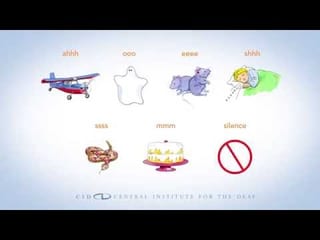 VideoCID Quick Tips: How to Conduct the Ling Six Sound TestCID Professional Developmentyoutube.com(external link, opens in a new tab)
 ArticleLearning to Listen (LTL) Sounds and PhrasesLearning to Listen (LTL) sounds and phrases are a fun way to introduce listening and language to your baby who is deaf or hard of hearing. Find out how.hearingfirst.org(external link, opens in a new tab)
 ArticleSupporting Auditory Skills Development at Home | Boys Town National Research HospitalFind a PhysicianPediatricsSpecialty CareHospital CareFor Patients For Physicians531-355-1234Knowledge CenterSupporting Auditory Skills Development at HomeSupporting Auditory…boystownhospital.org(external link, opens in a new tab)