
Ignite your child's language development through conversations, every day.
SparkMinds is an app that helps families of Deaf and Hard of Hearing (DHH) children turn everyday life into language learning opportunities. Meals, play time, car rides, and story time become intentional language learning moments with SparkMinds. Built on sound science, SparkMinds is designed by Dr. Uma Soman, PhD, LSLS Cert. AVEd, with decades of professional experience in family-centered, listening and spoken language intervention.
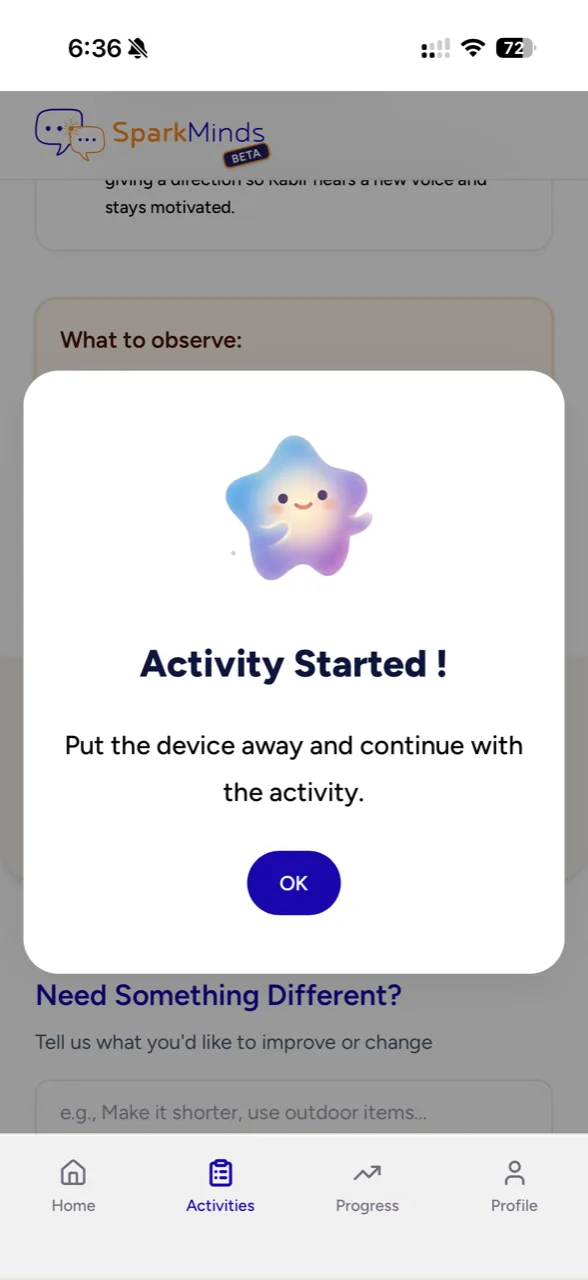
Then put the phone away and play!
Try it out. You're ready!
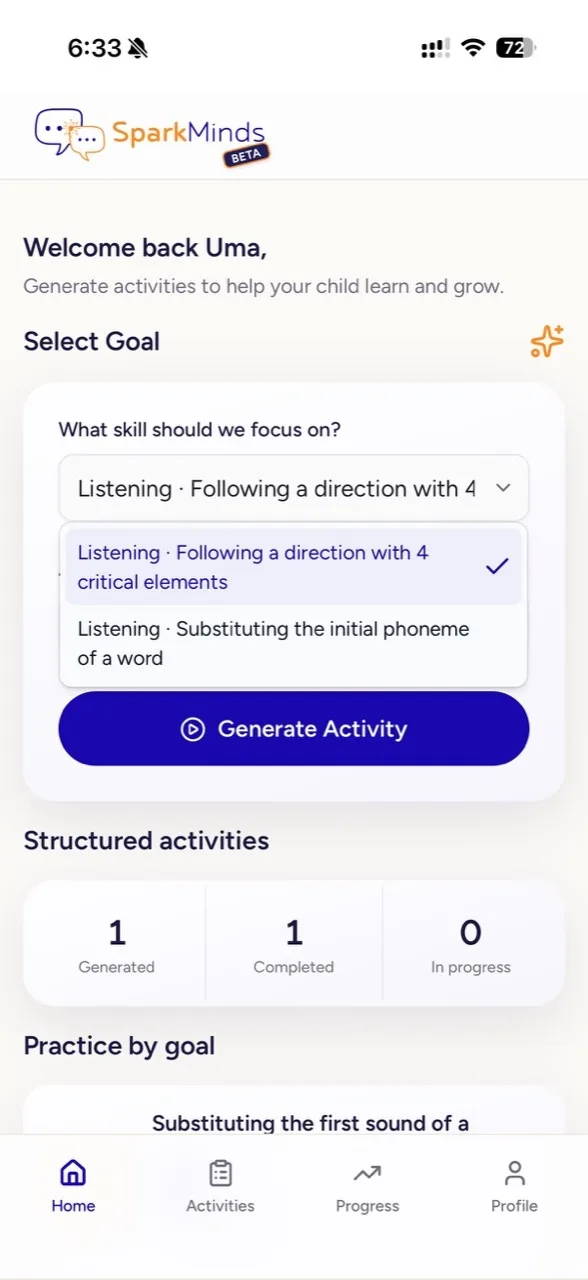
Select a goal
Pick the skill to learn and practice.
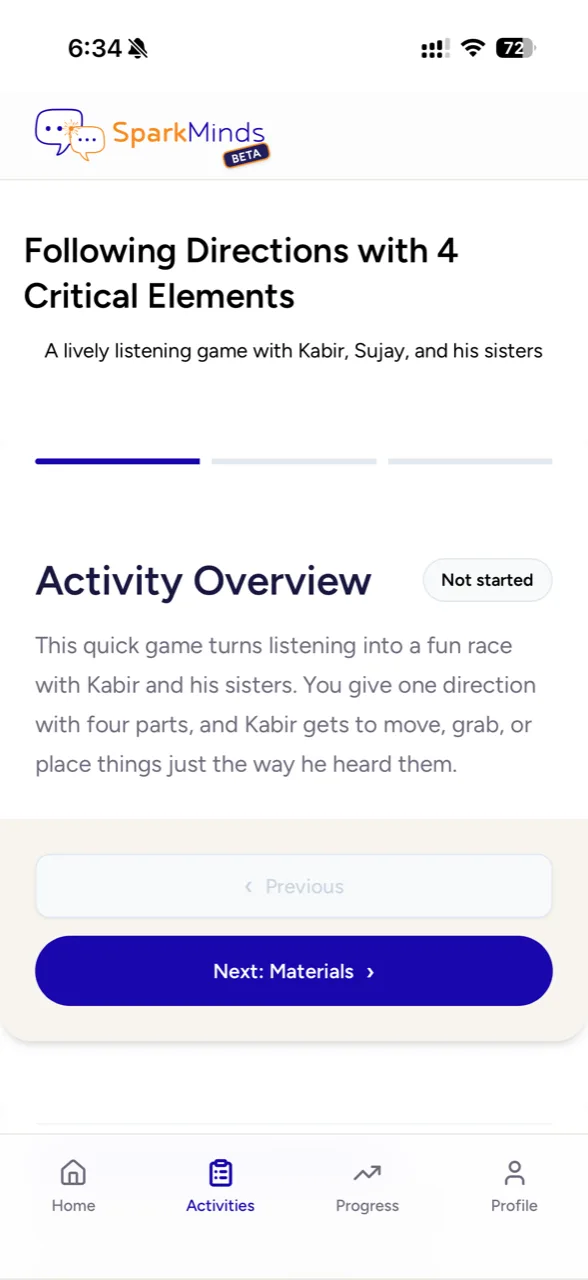
Get a fun, personalized activity
SparkMinds gives you a fun activity to weave into your day.
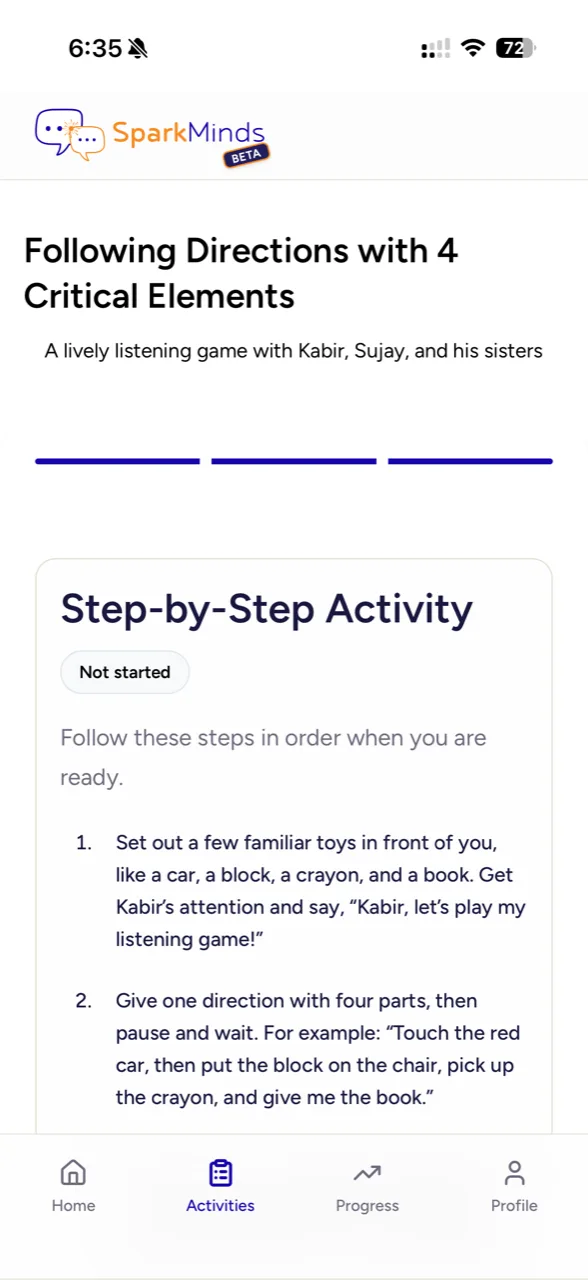
Know just what to do and say
Clear step-by-step guidance, including the exact words to use.
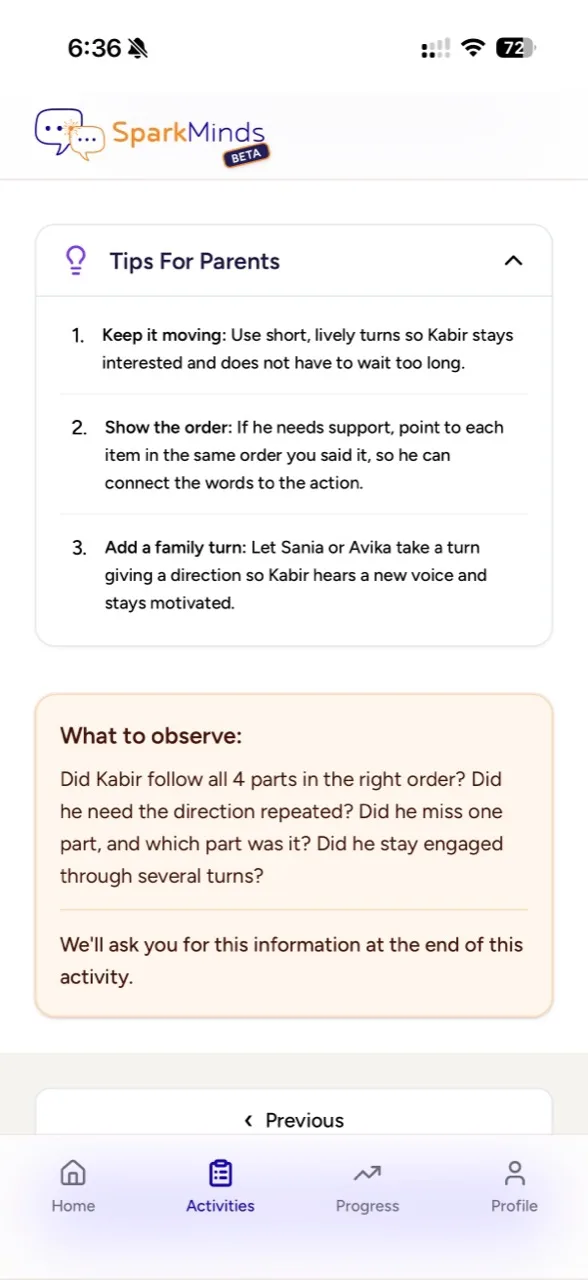
Review tips, and know what to watch for
Tips for parents to make the activity effective and to prime you to notice progress.
Then put the phone away and play!
Try it out. You're ready!
Select a goal
Pick the skill to learn and practice.
Hearing devices open the door. Language development is up to you, the family.
You got the diagnosis. You found the best audiologist and invested in hearing technology. Now you are planning your life around audiology appointments and therapy sessions. But you're still wondering: am I doing enough for my child?
Most families with DHH children are doing far more than they're given credit for. But many are also carrying a quiet, persistent worry:
“My child can hear now. Why isn't she speaking yet?”
“Am I doing this right?”
“What more can I do to help my child learn language?”
These worries aren't unjustified. They are signs you understand what's at stake. SparkMinds is built just for you.
It's not about doing more. It's about doing it more intentionally.
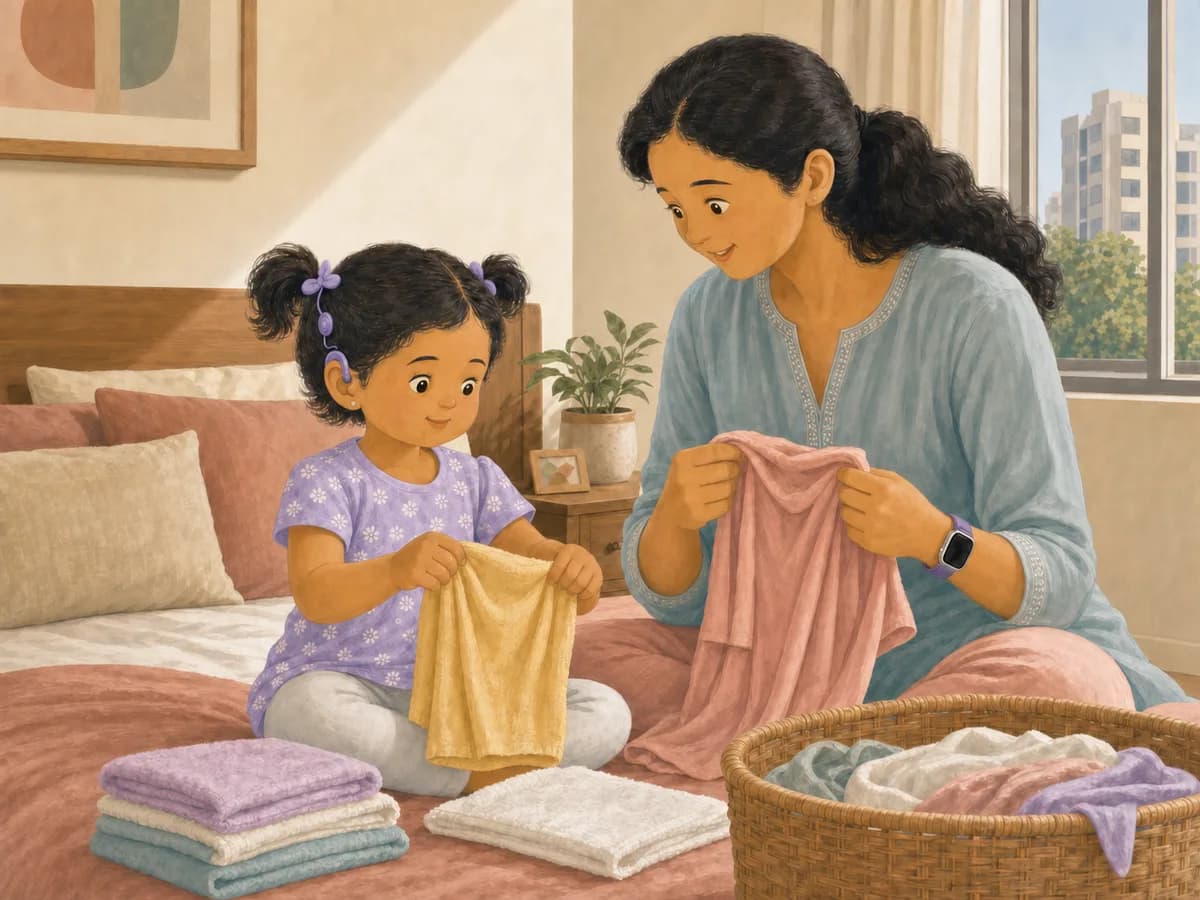
Image description: Two-year-old Indian girl Ruhi, wearing a purple cochlear implant and lavender floral shirt, sits cross-legged on a bed folding a yellow shirt with her mother, Renuka, amid stacks of clean laundry in a sunlit bedroom.
Ordinary moments. Extraordinary opportunities.
“Look at that shirt size. 4. You're a size 6. That 4 is smaller than 6. Let's put that one in the "hand me down" pile!”
— Stephanie, USA
“I am folding my shirt and it's a big shirt, your shirt is smaller because it's for your size!”
— Mariana, USA
“Is this big, small? Whose shirt is it? Is it clean, dirty? How does it smell? What did we use to wash it? What colour is your favourite? What season should we wear this shirt? Would you be cold or hot?”
— Wendy, Canada
“Oh! That's BIG! That's a BIG shirt! Whose shirt is that? Is that Mommy's shirt or Ruhi's shirt? Yes! It's Mommy's shirt! Let's fold Mommy's shirt. (Sing tune of “Open Shut Them”) 🎶 folding…folding…folding…folding. Folding Mommy's shirt! 🎶”
— Mary, USA
Children learn language while living life. They learn best through play, through daily routines, while having fun, not through activities that imitate therapy. You already have these moments. Breakfast. The car ride. Play time. Bedtime. These aren't breaks in your child's learning. They are precisely the opportunities that accelerate language development, when used intentionally.
SparkMinds doesn't teach your child for you. It gives you clear guidance for what to do in the moment, what to pay attention to, and how to know what's working for your child. SparkMinds is also not a replacement for your child's teachers and therapists. SparkMinds is a tool that parents can use with professionals to transform everyday conversations into language learning opportunities.
Image description: Two-year-old Indian girl Ruhi, wearing a purple cochlear implant and lavender floral shirt, sits cross-legged on a bed folding a yellow shirt with her mother, Renuka, amid stacks of clean laundry in a sunlit bedroom.
Ordinary moments. Extraordinary opportunities.
“Look at that shirt size. 4. You're a size 6. That 4 is smaller than 6. Let's put that one in the "hand me down" pile!”
— Stephanie, USA
“I am folding my shirt and it's a big shirt, your shirt is smaller because it's for your size!”
— Mariana, USA
“Is this big, small? Whose shirt is it? Is it clean, dirty? How does it smell? What did we use to wash it? What colour is your favourite? What season should we wear this shirt? Would you be cold or hot?”
— Wendy, Canada
“Oh! That's BIG! That's a BIG shirt! Whose shirt is that? Is that Mommy's shirt or Ruhi's shirt? Yes! It's Mommy's shirt! Let's fold Mommy's shirt. (Sing tune of “Open Shut Them”) 🎶 folding…folding…folding…folding. Folding Mommy's shirt! 🎶”
— Mary, USA
SparkMinds delivers daily guidance that ignites language development.
Clarity
You will know exactly what to do today. SparkMinds gives you a fun, individualized activity that helps your child build a specific language skill while “just playing.”
Confidence
You stop second-guessing whether you are helping your child’s language development between therapy sessions. You will know you are. Every day you practice, you are building your child's language.
Calm
The nagging “am I doing enough?” fades when you can see, day by day, what you did and what it’s building.
Built from the ground up for DHH families.
SparkMinds is designed from the ground up by Dr. Uma Soman, a globally recognized leader in family-centered listening and spoken language intervention. It gives you on-demand guidance, individualized for your family, to support your child’s unique path to listening and language.
Rooted in well established research and practice. Learn more here.
Built by Dr. Uma Soman, an expert in family-centered early intervention.
We're now onboarding Founding Families.
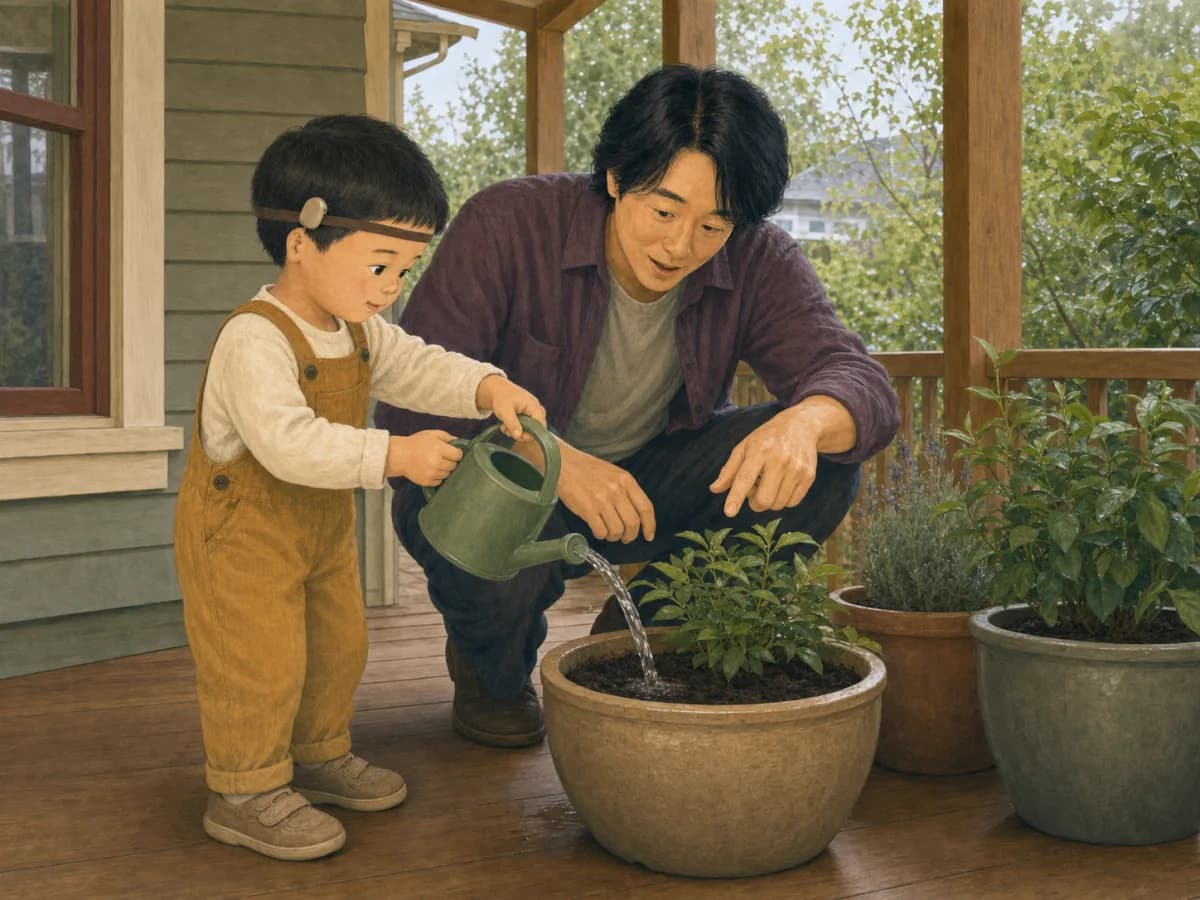
Image description: Three-year-old Chinese-American boy Leo, wearing a brown softband bone-conduction hearing device, waters a potted plant on the back porch while his father, Ross, kneels beside him and points to the soil.
Ordinary moments. Extraordinary opportunities.
“हे रोप किती गोंडस आहे, नाही का? रोपाला तहान लागली तर काय करावे?”
— मानसी, भारत
“The plant is so cute, isn't it? What should you do if the plant gets thirsty?”
— Manasi, India
“This plant is thirsty. Let's pour the water and give the plant a drink!”
— Jenna, USA
“You are pouring the water. The water is going in the pot. The water is all around the plant. The water helps the plant grow. This is a tomato plant. Do you see the little tomatoes? I love tomatoes!”
— Christina, USA
“The dirt is dry! What should we do? Let’s water the plant. The watering can is full. Wow, the watering can is heavy! Great job! You’re pouring the water around the plant.”
— Kameron, USA
“Wow, Leo! What do you notice! Yes! Your plants have grown so tall! Do you remember what plants need to grow? They need three things. Yes! That’s right! (Holds up fingers) Soil, sun, and water.”
— Mary, USA
“Let’s sing our planting song. 🎵 Little Leo had some plants. E-I-E-I-O. And on his plants he poured some water. E-I-E-I-O. With a sprinkle here and a sprinkle there. Here a sprinkle. There a sprinkle. Everywhere a sprinkle sprinkle. Little Leo had some plants. E-I-E-I-O. 🎵”
— Mary, USA
We're inviting DHH families from around the world, a few at a time, to begin daily guidance made for their child.
As a Founding Family, your child gets our closest attention now, and the path you help chart makes it easier for the families who come next.
Image description: Three-year-old Chinese-American boy Leo, wearing a brown softband bone-conduction hearing device, waters a potted plant on the back porch while his father, Ross, kneels beside him and points to the soil.
Ordinary moments. Extraordinary opportunities.
“हे रोप किती गोंडस आहे, नाही का? रोपाला तहान लागली तर काय करावे?”
— मानसी, भारत
“The plant is so cute, isn't it? What should you do if the plant gets thirsty?”
— Manasi, India
“This plant is thirsty. Let's pour the water and give the plant a drink!”
— Jenna, USA
“You are pouring the water. The water is going in the pot. The water is all around the plant. The water helps the plant grow. This is a tomato plant. Do you see the little tomatoes? I love tomatoes!”
— Christina, USA
“The dirt is dry! What should we do? Let’s water the plant. The watering can is full. Wow, the watering can is heavy! Great job! You’re pouring the water around the plant.”
— Kameron, USA
“Wow, Leo! What do you notice! Yes! Your plants have grown so tall! Do you remember what plants need to grow? They need three things. Yes! That’s right! (Holds up fingers) Soil, sun, and water.”
— Mary, USA
“Let’s sing our planting song. 🎵 Little Leo had some plants. E-I-E-I-O. And on his plants he poured some water. E-I-E-I-O. With a sprinkle here and a sprinkle there. Here a sprinkle. There a sprinkle. Everywhere a sprinkle sprinkle. Little Leo had some plants. E-I-E-I-O. 🎵”
— Mary, USA
Working with DHH families?
We're building relationships with professionals and parent leaders that work with families and DHH children. If you'd like to learn more, share feedback, or explore how SparkMinds fits alongside your work, we'd love to hear from you.