
Serve and return: the back-and-forth that builds a brain.
Your child points to their favorite toy and looks at you, you bring the toy, and your child smiles. This back-and-forth between you and your child is one of the most important stages in brain development. It lays the foundation for language development.
Your baby babbles, and you babble back. They look at a dog, and you say "yes, a dog!" They hold up a spoon, and you pretend to take a bite. Individual tiny moments. Together, repeated thousands of times, these moments are one of the most important things happening in your child's brain. Researchers call this back-and-forth "serve and return", and its role in brain development and language is second to none.
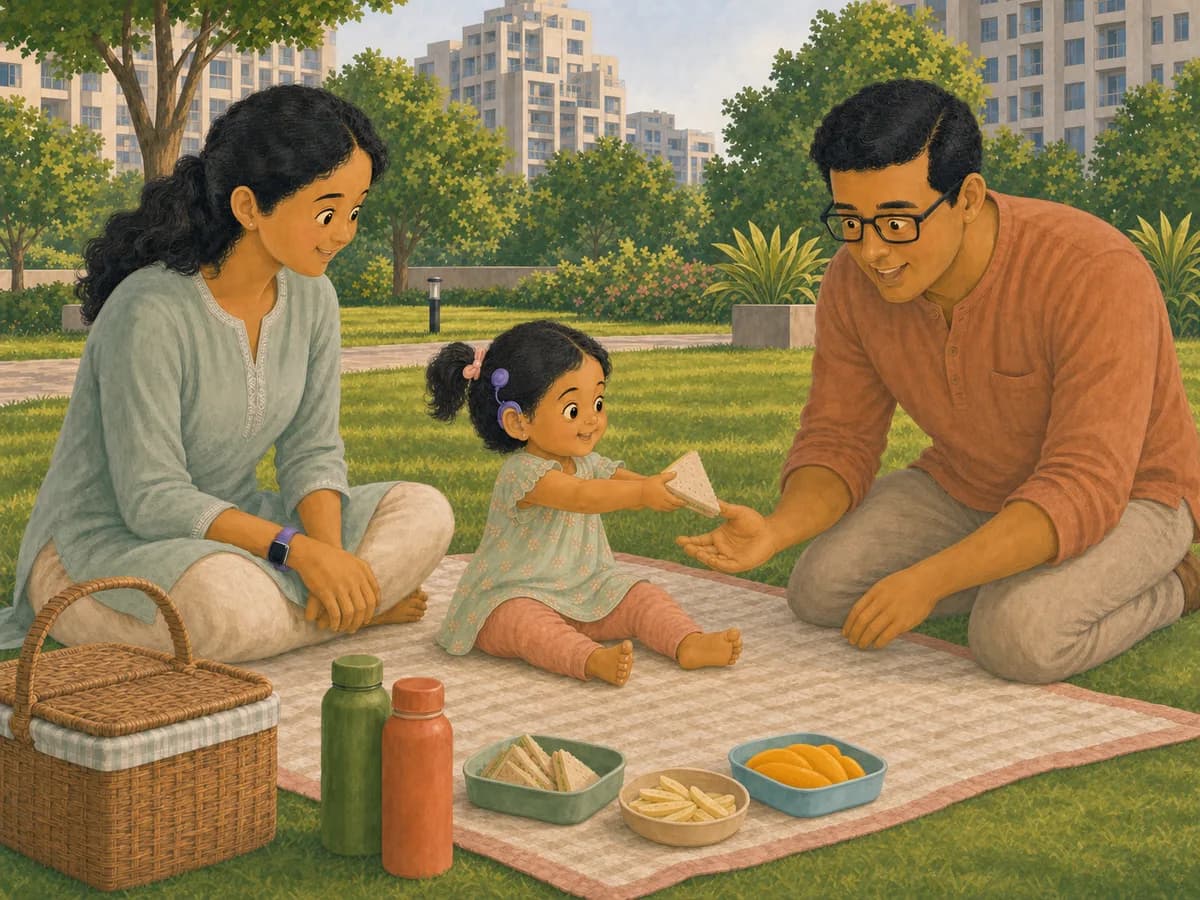
Image description: Two-year-old Indian girl Ruhi, wearing a purple cochlear implant, hands a sandwich to her father, Himanshu, during a family picnic on the lawn while her mother, Renuka, watches attentively, in their Bangalore residential community.
Ordinary moments. Extraordinary opportunities.
Serve and return is not just taking turns. It is taking turns that build on each other.
Picture a tennis rally. Your child "serves": a babble, a look, a gesture, a word, any small bid for your attention. You "return": you answer that bid, then wait for the next one, or better yet prompt the next one. Back and forth - trying for a volley of 5 every time.
This simple loop is doing a lot of complex work. Responsive, back-and-forth interaction with a caring adult is what wires a child's brain for communication. It shapes not just language but attention, emotion, and your child's sense that the world responds to them. The key word is responsive.
What you can do at home
- Catch the serve. Treat any sound, look, or gesture as a conversation worth answering. It doesn't have to be a word. Early on, it rarely is.
- Return in kind. Answer what your child actually offered. If they babble, babble back. If they point, name it and hand it over. Match their topic, not yours.
- Then wait. Hold the silence for a few seconds, but maintain eye contact and lean in. That pause is the invitation for the next serve, and it is the part most of us skip.
- Follow their lead. Whatever your child is interested in right now is the best thing to build on and join in. A shared interest is what makes the rally last.
A rally of a few rounds, several times a day, in the moments you are already sharing, does more than any single "lesson" ever can. Taking turns, the back-and-forth itself, is the habit that "serve and return" builds.
You don't need a plan. You just need to notice–and respond.
Beware the interruptions!
Three ordinary things interrupt the serve-and-return rally.
- Filling the pause. If you don't hold the silence and keep speaking or "serving", your child never has to return. Waiting can feel like forever, but count to five in your mind before you serve again. Say, "Yeah, a cat! Meow" Wait 1, 2, 3, 4, 5, say it again "meow".
- Turning it into a drill. When a "serve" becomes "a quiz," the connection is lost. Create a warm exchange, this isn't a test. Don't just ask questions. Don't call the child's name to check if they are hearing.
- Divided attention. A glance at your phone–the notorious "technoference"–halts the serve and return! The child serves but no one returns. Or you serve and don't notice the child's return. You don't have to be perfect every time, just try to be present as much as possible.
The good news - you're probably already doing this.
Serve and return is not a technique you need to "learn". As human beings, we naturally respond to a child's sounds, gestures, and early words. Take a moment and reflect on your current interactions.
- Is your child "serving"? What does that look like?
- How are you returning the serve?
- How does your child respond to your return? Do they notice it? Do they serve back?
- What types of activities get the serves going?
The next time you complete a serve and return loop, CELEBRATE! 🥳 You're building your child's brain. And you're building a strong relationship. ❤️
What we do at SparkMinds
SparkMinds helps you find a few more serve-and-return moments in the day you already have, and make the most of them, without turning your time together into a lesson. It works in the in-between, tuned to your child and your routines, alongside the professionals guiding your child's care.
If you would like to build this with us, we are onboarding Founding Families now.
Learn more
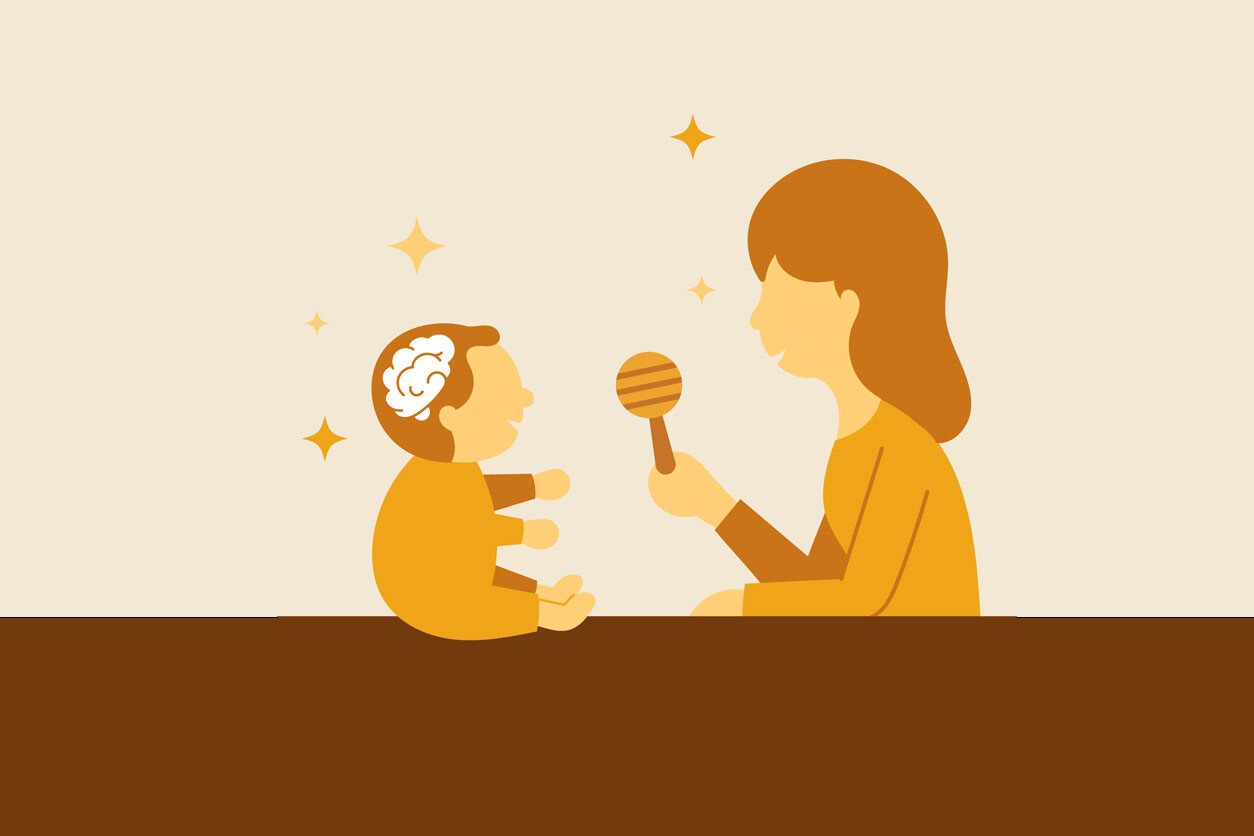 ArticleServe and Return: Back-and-forth exchangesDiscover how serve and return interactions—back-and-forth exchanges between a child and adult—play a key role in shaping brain architecture.developingchild.harvard.edu(external link, opens in a new tab)
 VideoLearn About Serve & ReturnCenter on the Developing Child at Harvard Universityyoutube.com(external link, opens in a new tab)
 ArticleServe And ReturnServe and return is a foundation of a good tennis match, but what does it have to do with communicating with your child? More than you might think!hearingfirst.org(external link, opens in a new tab)
 VideoServe and Return: Grow your baby’s conversation skillsHearing Firstyoutube.com(external link, opens in a new tab)
- Research · PDFBeyond the 30-million-word gap: Children's conversational exposure is associated with language-related brain functionRomeo, R. R., Leonard, J. A., Robinson, S. T., West, M. R., Mackey, A. P., Rowe, M. L., & Gabrieli, J. D. (2018). Psychological Science, 29(5), 700-710.pmc.ncbi.nlm.nih.gov(external link, opens in a new tab)